
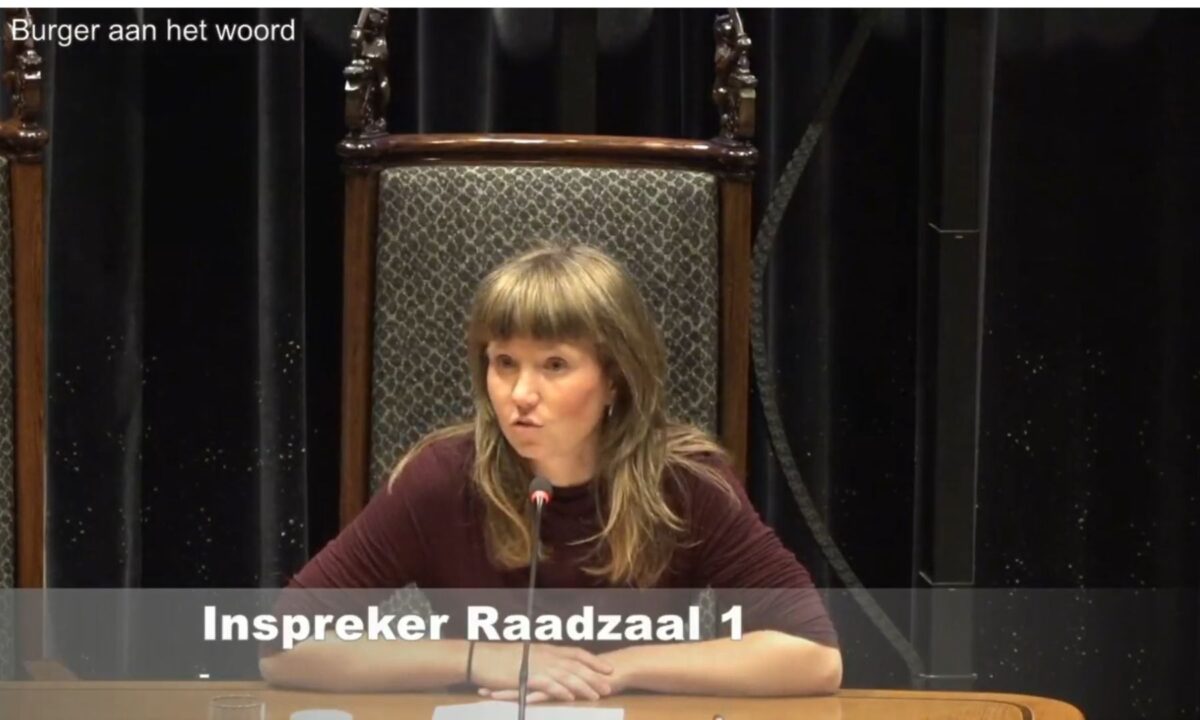
Inspraak Jurrien van Rheenen in de commissie Onderwijs & Samenleving van de Leidse Gemeenteraad op 8 oktober 2026.
Mijn naam is Jurrien van Rheenen. Ik werk bij het vlakkevloerpodium Theater De Generator in Leiden. Ieder jaar organiseren wij het Arm! festival, waarin we middels theater onderzoeken hoe armoede aan te pakken in onze stad. Het festival droeg eerder bij aan het verdwijnen van de Leidse bijstandskliklijn: dankzij publiek en gemeenteraadsleden die inzagen dat dat onmenselijk was en dat je mensen die al in een kwetsbare positie zitten niet verantwoordelijk moet maken voor hun armoede; maar moet kijken naar het beleid en de structuren die daaraan ten grondslag liggen – ook regionaal.
Of wat ons betreft liever gezegd: voorál regionaal. De Leidse politiek is er namelijk voor de Leidse inwoner: dankzij hun stem zitten jullie hier in de raad. Problemen dichtbij huis los je het liefst dichtbij huis op: zo pak je ze bij de kern aan én zorg je als Leidse gemeenteraad voor echte vertegenwoordiging van onze inwoners. Dit alles klinkt heel simpel, ik zou dit principe zelfs kunnen uitleggen aan Midas, mijn neefje van anderhalf. Want hij weet dat papa en mama voor hem zorgen, in goede en slechte tijden. Tijdens het Arm! festival afgelopen voorjaar kon ik echter de volwassene aanwezigen in onze theaterzaal al niet uitleggen dat er in onze stad arbeidsuitbuiting plaatsvindt aan de lopende band en dat Gemeente Leiden hier niks aan doet.
Theatermaker Zsófi Rebeka Kozma sprak verschillende Leineraren die in de horeca werken en maakte daar een voorstelling over. We zagen de volledige uitputting van horeca personeel in de meest erbarmelijke omstandigheden. We hoorden over 8 tot 12 uur aaneengesloten werken, zonder pauze. We hoorden over de structurele onderwaardering van werken in de hospitality dat gezien wordt als “een baantje dat je uit moet zitten totdat je ‘echt’ werk gaat doen”. We hoorden over werken binnen onhygiënische omstandigheden, over fysiek uitputtend werk met steeds dronkener wordende klanten die vrouwelijk personeel lastigvallen. Over bazen die je in je gezicht uitlachen als je om bescherming vraagt en bazen die regelmatig zelf dader zijn van gewelddadig of seksueel grensoverschrijdend gedrag, vernedering en discriminatie. We hoorden over de angst om deze vreselijke dingen te melden bij de werkgever, laat staan de arbeidsinspectie, omdat je je baan niet wilt verliezen. Dit gebeurt in ónze stad met ónze inwoners en Gemeente Leiden doet hier niks aan. Als werkers zelf trucs moeten bedenken om pauze af te dwingen, zoals extra water drinken om naar de wc te kunnen, omdat ze geen pauze krijgen, zorgt Leiden niet goed voor haar inwoners.
Dit zijn op zichzelf al grote problemen, die een nóg groter probleem zijn voor mensen die onder een kwetsbare groep vallen, zoals migranten en jongeren. Vanaf je 13de mag je al werken en de verantwoordelijkheid bouwt zich op en rond je 17de ben je al bijna volledig inzetbaar. En weten jullie dat een 15-jarige 4,41 euro verdient per uur en een 17-jarige 5,81 euro? Als we dit als Nederland legaal vinden, waar een bakje bosbessen al datzelfde bedrag is bij de AH waarvan de baas Frans Muller 7 miljoen per jaar mag verdienen, als wij als land dit geen kinder-arbeid noemen, dan moet de stad Leiden op z’n minst haar kinderen beschermen tijdens het werk. Als we als land migranten structureel minimumloon aanbieden omdat ondernemers goedkope arbeid nodig hebben om winst te maken, moeten we als Leiden op z’n minst deze mensen beschermen tijdens het werk.
Terwijl ik dit schrijf, staan er 18 tabbladen open. Al twee uur zoek ik naar waar ik in Leiden arbeidsuitbuiting kan melden, zonder succes. Wel stuitte ik op de zaak Lupi Coffee, waarover de SP in 2023 vragen stelde. De gemeente veroordeelt arbeidsuitbuiting, maar verwijst vervolgens naar de landelijke Arbeidsinspectie en zegt kwetsbare werkers over hun rechten te informeren. Hoe je concreet geholpen wordt in Leiden kan ik echter niet vinden.
Vijf andere tabbladen gaan wél over hoe de gemeente Leidse ondernémers ondersteunt. Een eigen categorie op de website zelfs. Wél de ondernemer informeren en faciliteren, maar niet de mensen die het werk doen. Dat is geen verantwoordelijkheid nemen; dat is van wegkijken een keuze maken.
De werkende Leidse burger verdient directe actie. Daarom stellen wij vanuit festival Arm! de raad en het college drie actiepunten voor:
- Een meldpunt voor arbeidsmisstanden, waar werkers terechtkunnen en waar schending van hun rechten ook daadwerkelijk consequenties heeft.
- Onderzoek naar buitensporige inkomensverschillen en die publiekelijk afkeuren, óók bij instellingen die met publiek geld werken.
- Een Goede Werkgever Award: zet werkgevers die goed voor hun werkers zorgen liever in het zonnetje dan de Leidse Ondernemer van het Jaar.
Mijn tijd is op. Aan u nu de verantwoordelijkheid dat ik mijn neefje over een jaar net zo vanzelfsprekend kan vertellen dat Leiden haar inwoners waardeert en goed voor hen zorgt zoals mama en papa dat doen.
Dank jullie wel.
Arm!
Op 10 april 2027 vindt in Theater De Generator weer het Arm! Festival plaats. Een festival dat armoede bespreekbaar maakt én aanpakt. Dit jaar zoeken we samen met publiek naar concrete oplossingen voor inkomensongelijkheid met o.a. een – in residentie gemaakte – performance van Jonny Tudor.
English
Leiden, look after your citizens
Statement by Jurrien van Rheenen to the Education & Society Committee of Leiden City Council on 8 Oct 2026.
My name is Jurrien van Rheenen. I work at Theater De Generator in Leiden. Every year, we organise the Arm! festival, in which we use theatre to explore how to tackle poverty in our city. The festival previously helped bring about the abolition of Leiden’s social security tip-off line: thanks to the public and local councillors who recognised that this was inhumane and that people who are already in a vulnerable position should not be held responsible for their poverty; instead, we must look at the policies and structures that underlie it – including at a regional level.
Or, as far as we’re concerned: especially at a regional level. After all, Leiden’s politics are there for the people of Leiden: it is thanks to their votes that you are sitting here on the council. Problems close to home are best solved close to home: that way, you tackle them at their root and, as the Leiden City Council, ensure genuine representation of our residents. All this sounds very simple; I could even explain this principle to Midas, my 1.5-year-old nephew. Because he knows that Mummy and Daddy look after him, in good times and bad. However, during the Arm! festival last spring, I was already unable to explain to the adult audience in our theatre that labour exploitation is happening all the time in our city and that the Municipality of Leiden is doing nothing about it.
Theatre maker Zsófi Rebeka Kozma spoke to several Leiden residents working in the hospitality sector and created a performance based on their stories. We witnessed the utter exhaustion of hospitality staff working in the most appalling conditions. We heard about working 8 to 12 hours straight, without a break. We heard about the systemic undervaluing of work in the hospitality sector, which is seen as ‘a job you have to sit out until you start doing “real” work’. We heard about working in unhygienic conditions, about physically gruelling work with customers who become increasingly drunk and harass female staff. About bosses who laugh in your face when you ask for protection, and bosses who are themselves regularly the perpetrators of violent or sexually inappropriate behaviour, humiliation and discrimination. We heard about the fear of reporting these terrible things to the employer, let alone the labour inspectorate, because you don’t want to lose your job. This is happening in our city to our residents, and Leiden City Council is doing nothing about it. If workers have to come up with their own tricks to force a break – such as drinking extra water so they can go to the toilet because they aren’t given a break – then Leiden is not looking after its residents properly.
These are major problems in their own right, and they pose an even greater problem for people belonging to vulnerable groups, such as migrants and young people. You’re allowed to work from the age of 13, and your responsibilities build up; by the time you’re around 17, you’re almost fully employable. And did you know that a 15-year-old earns 4.41 euros an hour and a 17-year-old 5.81 euros? If we in the Netherlands consider this to be legal – where a tub of blueberries already costs the same at the AH, whose boss, Frans Muller, is allowed to earn 7 million a year – and if we as a country do not call this child labour, then the city of Leiden must at the very least protect its children whilst they are working. If, as a country, we systematically offer migrants minimum wage because business owners need cheap labour to make a profit, then we in Leiden must at the very least protect these people whilst they are working.
As I write this, I have 18 tabs open. I’ve been searching for two hours now to find out where I can report labour exploitation in Leiden, without success. I did, however, come across the Lupi Coffee case, about which the SP raised questions in 2023. The council condemns labour exploitation, but then refers the matter to the national Labour Inspectorate and says it informs vulnerable workers about their rights. However, I cannot find any information on how, in practical terms, you can get help in Leiden.
Five other tabs, however, do cover how the council supports Leiden-based entrepreneurs. There’s even a dedicated section on the website. They do inform and support the entrepreneurs, but not the people actually doing the work. That is not taking responsibility; it is a conscious choice to look the other way.
Leiden’s working citizens deserve immediate action. That is why we at the Arm! festival are proposing three action points to the council and the executive committee:
- A reporting centre for labour abuses, where workers can turn to and where violations of their rights actually result in consequences.
- An investigation into excessive income disparities and a public condemnation of these, including at organisations that operate with public funds.
- A Good Employer Award: let’s put employers who look after their workers well in the spotlight, rather than the Leiden Entrepreneur of the Year.
My time is up. It is now up to you to ensure that, in a year’s time, I can tell my little nephew with the same certainty that Leiden values its residents and looks after them just as Mum and Dad do.
Thank you all.
Arm!
On April 10, 2027, the Arm! Festival will return to Theater De Generator—a festival dedicated to bringing the issue of poverty into the conversation and actively addressing it. This year, together with the audience, we will explore concrete solutions to income inequality, featuring, among other things, a performance by Jonny Tudor, developed during his residency.